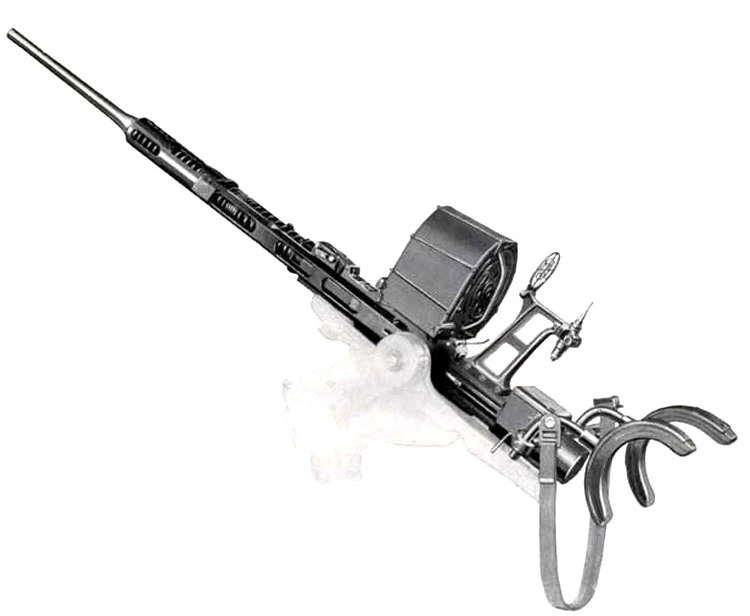

Oerlikon L70, an API blowback operated 20 mm autocannon, and one of the most widely produced weapons of its type.
Autocannon (a portmanteau of "automatic cannon") is a class of weapons functionally the same as machine guns, but of higher caliber than heavy machine guns, with the cut-off typically held to be at 20 mm. Their rounds must be shells: if they only fire unitary grenade cartridges they are instead classified as automatic grenade launchers.
Typically autocannons are much too large and heavy to be used by dismounted infantry, at very least requiring a wheeled mounting. They are commonly used to provide rapid-fire armament for vehicles, ships and aircraft, serving as either anti-aircraft guns or being used to engage light armored vehicles. They are typically the primary armament of modern infantry fighting vehicles.
History
The delineation between heavy machine gun and autocannon is largely a result of the St. Petersburg Declaration of 1868, which prohibited the use of explosive rounds weighing less than 14 ounces (0.875 pounds, 400 grams) against infantry: this in turn imposed a minimum size on any machine gun designed to fire explosive ammunition.
The first autocannon was the QF 1-pounder, a massively enlarged version of the Maxim gun. While initially designed for engaging infantry on a field carriage, it proved quite flexible, finding application in attacking gunboats and torpedo boats in naval use and serving as the first automatic anti-aircraft gun.